 blog
Epoxy Garage Floor Coating Reviews: What Holds Up
Quick Summary
The most useful epoxy garage floor reviews judge adhesion, abrasion and chemical resistance, not just color. DIY kits can work well, but success depends on a clean, dry, degreased slab, correct mixing, and enough material for a second coat.
- Reliable reviews mention grinding, moisture testing and primer, not just the finish color.
- Skipping cleaning, drying, degreasing or light etching is the most common reason coatings fail.
- Mix small batches, since two-part epoxy hardens in the bucket once it starts curing.
- Check kit square footage and add extra for waste and a second coat to avoid lap lines.
- Keep vehicles and heavy tools off the floor until it has fully cured for several days.
Table of Contents
- How Epoxy Garage Floor Coatings Are Judged in Reviews
- Garage Floor Epoxy Kit Reviews: DIY Results and Difficulty
- Epoxy vs Polyaspartic Garage Floor: Which Holds Up Better
- Booking a Professional Assessment of Your Garage Floor
- Frequently Asked Questions
How Epoxy Garage Floor Coatings Are Judged in Reviews
Last Updated: November 5, 2026
Epoxy Garage Floors applies coatings to garages, and we know what separates a floor that looks good on day one from one that still holds up after winter. Most epoxy garage floor reviews focus on appearance, but a shiny finish tells you little about performance under tires, hot oil and salt-laden boots. A useful review judges adhesion, abrasion and chemical resistance, ease of cleaning, and how the finish looks after a year of use.
Adhesion is the first thing to check. Reviewers who mention grinding, moisture testing and primer are far more reliable than those who only describe the color.
Next, look at chemical and stain resistance. Garages collect oil drips, antifreeze and de-icing salt, so a credible review should describe what was spilled and how the surface reacted. Abrasion matters too, especially where tools are dragged or workbenches sit.
Finally, consider the kit versus professional question. Reviews of DIY kits often report strong early results, so judge them on how the floor performs after several seasons.
Garage Floor Epoxy Kit Reviews: DIY Results and Difficulty
DIY kits can produce a solid floor, but the work is less forgiving than the box suggests. Most kits require a clean, dry, degreased slab and a light etch or grind before coating. Skipping any of those steps is the most common reason for failure.
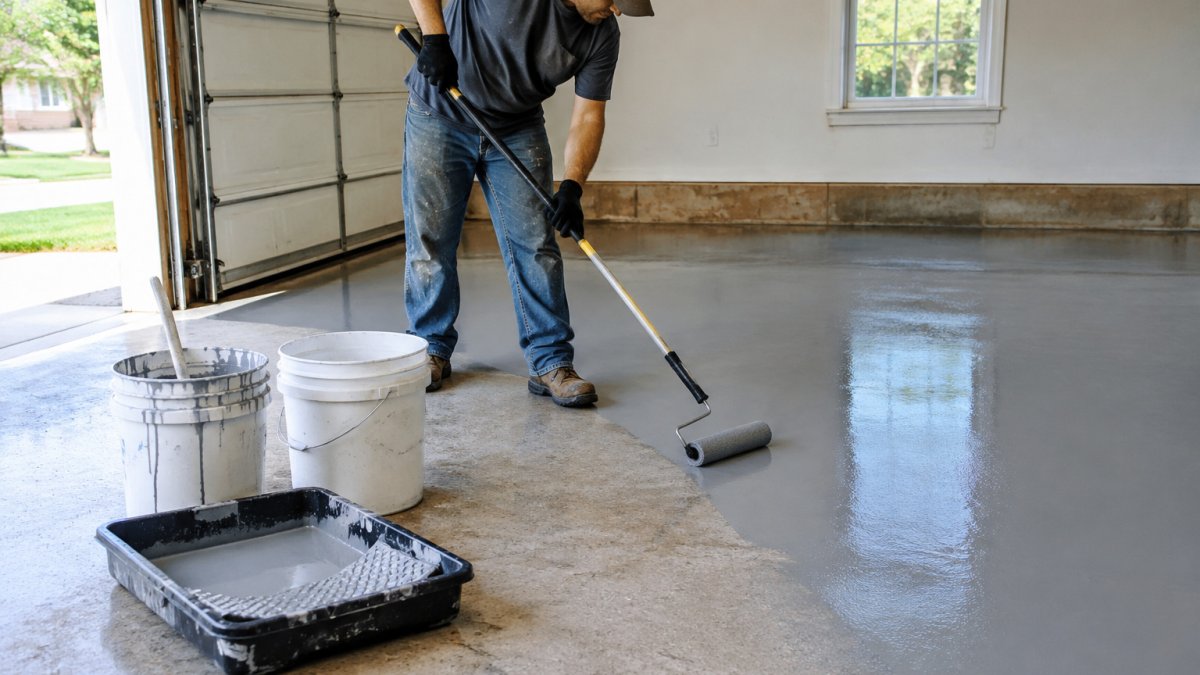
The mixing ratio and pot life are where many first-time installers struggle. Once two-part epoxy is mixed, it begins to cure, and a large batch can harden in the bucket before it reaches the floor. Work in small sections, keep a wet edge and finish one zone before starting the next.
Coverage is another point reviewers often underestimate. Check the kit's square footage against your garage and add extra for waste and a second coat. A two-car garage usually needs more material than people expect, and running short mid-coat leaves visible lap lines.
Curing time also deserves attention. Many kits allow light foot traffic within a day, but vehicles and heavy tools need several days. Rushing this stage can leave marks that never fully disappear.
If you have cracked or heavily stained concrete, a kit alone may not be enough. Professional assessment can tell you whether the slab needs repair before any coating goes on.
The main DIY pitfalls reviewers run into are summarised below.
| Problem | Cause | Fix |
|---|---|---|
| Coating fails or peels | Slab not clean, dry and degreased, or no light etch or grind | Clean, dry and degrease the slab, then etch or grind before coating |
| Mixed epoxy hardens in bucket | Large batch mixed before it can be used | Work in small sections and keep a wet edge |
| Visible lap lines | Kit coverage underestimated, running short mid-coat | Check square footage, add extra for waste and a second coat |
| Marks that never fully disappear | Vehicles or heavy tools on floor before full cure | Allow several days before vehicles and heavy tools |
| Coating does not hold on damaged slab | Cracked or heavily stained concrete | Get a professional assessment to check for repair first |
Epoxy vs Polyaspartic Garage Floor: Which Holds Up Better
Many garage owners ask whether polyaspartic coatings are worth the extra cost. The answer depends on how you use the space.
Compare the two on durability under abrasion, color stability, cure time and total installed cost. Ask any provider to show samples and explain how each system will be applied.
Booking a Professional Assessment of Your Garage Floor
A professional assessment is the fastest way to find out whether your floor is ready for a coating. At Epoxy Garage Floors, we begin with a comprehensive floor preparation and inspection process, then recommend the finish that suits your garage.
Before you book, note any problems you have seen, such as peeling sections, oil stains or areas where water sits. Share what the garage is used for, whether you plan to add workbenches or a hobby area, and whether children or pets spend time on the floor, since that affects finish choice.
Ask for a written scope covering preparation, products, number of coats and expected curing schedule. A clear scope is the best way to compare providers. Contact Epoxy Garage Floors for a free quote and an honest opinion on whether your floor needs coating, repair or both.
Frequently Asked Questions
How long does an epoxy garage floor coating last?
Service life depends mostly on how well the concrete was prepared, the product quality and the traffic the floor gets. A properly prepared and cured coating in a garage that carries ordinary vehicle traffic can remain in good condition for many years, while coatings applied over dust, oil or moisture often start peeling or bubbling earlier. Regular cleaning of oil and tire marks helps preserve the finish. Ask any provider for their written warranty terms and what that warranty actually covers before you commit.
Is a DIY epoxy kit as durable as a professional installation?
A DIY kit can produce a solid result if you follow the mixing ratio, working time and recoat window exactly and invest real effort in surface preparation. Most failures in DIY work trace back to skipped grinding or etching, incorrect humidity or temperature during application, and rushed mixing. Professional crews bring equipment, moisture testing and experience with the product, which usually makes the difference in long-term adhesion. Compare the total cost of materials, rental equipment and your time against a quote before deciding.
Should I choose epoxy or polyaspartic for my garage floor?
Epoxy and polyaspartic are both coating options offered by Epoxy Garage Floors, with a range of floor flake colors available. The right choice depends on your budget, how soon you need the garage back in use and how much sunlight reaches the floor. Ask your provider which system they recommend for your specific garage and why.